.png?w=204&h=18)

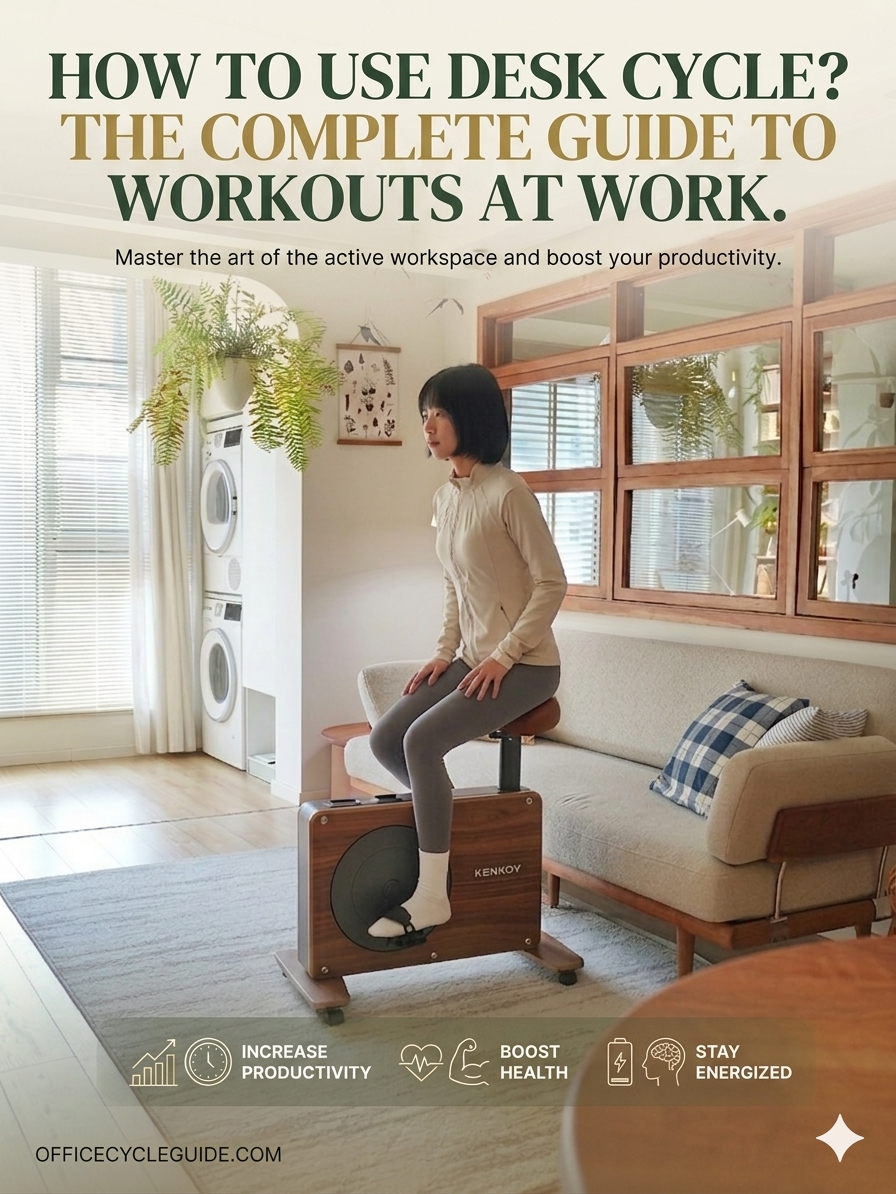
Staying active while working doesn't have to mean abandoning your desk. We've seen more people turning to desk cycles as a practical solution for breaking up long sitting sessions. But here's the thing—just placing one under your desk and pedaling away won't give you the best results.
Getting the most out of your desk cycle means understanding how to set it up properly, maintain good form, and avoid common mistakes that can turn this helpful tool into a frustration. We'll walk you through everything you need to know to start pedaling with confidence, whether you're using a Cube Cycle or any other model.
Getting Your Desk Cycle Set Up Correctly
Before you start pedaling, you'll want to find the right position for your bike. This step makes all the difference between smooth cycling and constantly bumping your knees.
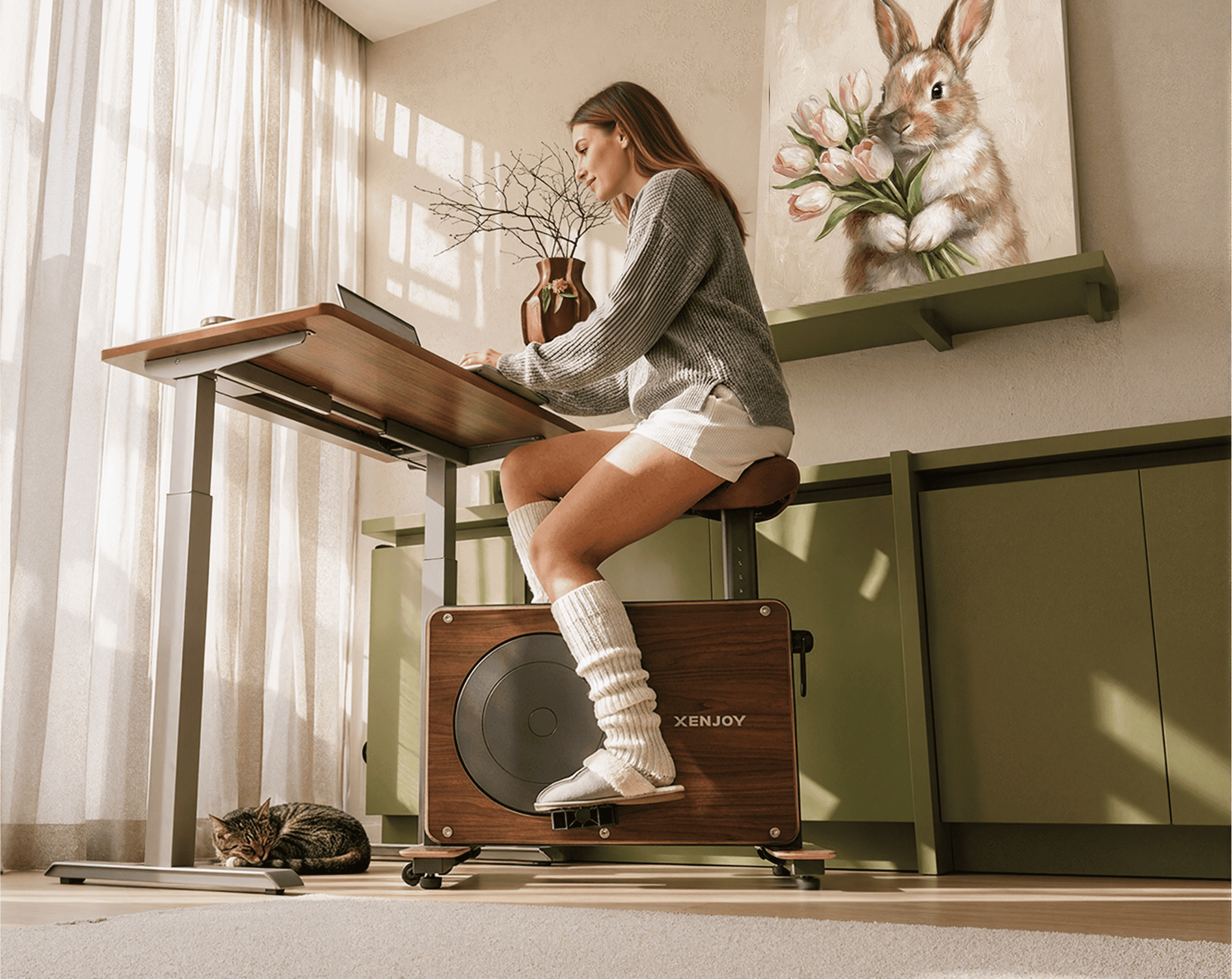
Place the bike under your desk and position your chair close enough to type comfortably. Now check your knee clearance. When the pedal reaches its highest point, you should have at least 2-3 inches of space between your knees and the desk bottom. If you're hitting the desk, you've got a few options: lower your chair height, move the bike slightly forward so your legs extend more, or raise your desk if it's adjustable.
Most users find that an adjustable-height desk makes setup much easier. With our Cube Cycle's 10 height adjustment levels ranging from 24.2 to 33.5 inches, you can match different body types and desk configurations. Mark the ideal position with tape once you've found your sweet spot—this saves you time repositioning every day.
Proper Pedaling Technique That Actually Works
Good technique keeps your upper body still and prevents your chair from rolling backward. We recommend focusing on three key elements.
First, pedal downward rather than pushing forward. When you push forward, you'll send both your chair and the bike sliding across the floor. Pointing your toes forward on the downward stroke keeps your heels from hitting the floor and helps maintain a smooth motion.
Second, keep your upper body stable. Your body shouldn't move side to side, and your chair shouldn't swivel while you're pedaling. If you're noticing movement, check that you're pedaling straight down rather than at an angle.
Third, maintain proper foot placement. Position the balls of your feet over the center of the pedals. Our Cube Cycle features dual-sided pedals with massage rollers on one side, giving you options for barefoot use that can help with circulation. Avoid pointing your toes downward throughout the stroke—this puts unnecessary strain on your calves.
Starting Smart With Resistance Levels
Jumping straight to high resistance is a quick way to end up sore and discouraged. We've found that gradual progression works better for building a sustainable habit.
Start at the lowest resistance level for your first few sessions. Aim for 10-15 minutes at a comfortable pace of around 15 mph. This gives your muscles time to adapt without overwhelming them. The Cube Cycle offers 8 levels of manual magnetic resistance, letting you switch from light recovery sessions to more demanding workouts as you progress.
After a few days, if you're not feeling sore, bump up the resistance by one level. For work sessions, we recommend keeping resistance at level 3 or lower. Higher resistance levels work great for dedicated workout time, but they'll make it harder to focus on tasks while pedaling. The magnetic belt-drive system ensures quiet operation at any resistance level, so you won't disturb colleagues or family members.
Avoiding the Rolling Chair Problem
Nothing breaks your pedaling rhythm faster than your chair sliding backward. This happens to almost everyone at first, but there are several fixes.
The simplest solution is adjusting your pedaling motion. Push down rather than forward, which anchors your feet and stabilizes both chair and bike. If your chair still moves, try placing a mat underneath both the chair and bike. A yoga mat or non-slip rug usually does the trick.
You can also use the tether strap that comes with many desk cycles. Loop it around your chair base and the bike frame to keep everything connected. For persistent issues, wheel stoppers or even swapping to a stationary chair work well. The Cube Cycle's compact 3.2 square feet footprint (27.8" x 16.5" x 33.7") makes it easy to position for stable use without taking over your workspace.
Building Your Desk Cycling Routine
Consistency matters more than intensity when you're starting out. We suggest beginning with short sessions spread throughout your day rather than one long workout.
Try 10-15 minute sessions 2-3 times daily during tasks that don't require heavy concentration. Answering emails, attending virtual meetings where you're not presenting, or reading documents work perfectly. As weeks pass, you'll find pedaling becomes more automatic and you can handle it during more complex tasks.
The built-in LED console on the Cube Cycle tracks your time, speed, distance, and calories in real-time. This data helps you set realistic goals and track progress. Plus, Bluetooth connectivity with apps like Merach, Kinomap, and Zwift adds variety and motivation to your sessions.
Listen to your body. Take breaks when you need them, and don't feel pressured to pedal constantly throughout the day. Even 30 minutes of total pedaling time across your workday adds up to real benefits over weeks and months.
Common Mistakes to Watch Out For
We've seen several mistakes that trip up new desk cycle users. Avoiding these will make your experience much smoother.
Don't slouch forward. Many people unconsciously lean toward their desk while pedaling, which strains the lower back. Sit upright with your back supported. If your chair seat is too deep, add a lumbar cushion and sit toward the front edge.
Don't ignore your arm position. Your elbows should be at roughly 90 degrees or slightly more when your hands are on your keyboard. If you're hunching your shoulders or reaching too far, adjust your chair height or keyboard position.
Don't expect immediate calorie burn results. The calorie counters on most displays tend to be inaccurate. Focus instead on time spent active and how you feel. Studies show even light cycling at 15 mph raises energy expenditure about 3 times more than just standing.
Don't forget maintenance. The Cube Cycle ships fully assembled and uses sealed bearings that require no lubrication. Just periodically check that pedals stay tight to prevent any loosening over time.
Maximizing Your Investment
Your desk cycle works best as part of a broader movement strategy. We don't recommend thinking of it as a replacement for dedicated exercise or walking breaks—it's a tool for adding activity during hours you'd otherwise spend completely sedentary.
The Cube Under Desk Exercise Bike supports users up to 300 pounds and heights up to 6'5", making it accessible for most body types. Its transport wheels make moving between rooms effortless, so you can use it at your office desk during the day and move it to your living room for TV time in the evening.
Consider tracking your weekly totals rather than daily sessions. Aiming for 150 minutes of total pedaling time per week aligns with general activity recommendations. Break this into whatever session lengths work for your schedule—there's no single "right" way to accumulate those minutes.
Conclusion
Using a desk cycle effectively comes down to proper setup, good technique, and realistic expectations. Position your bike for adequate knee clearance, pedal downward to maintain stability, start with low resistance, and build gradually. Address chair rolling with mats or tethers, and focus on consistency over intensity.
The desk cycle isn't a magic solution, but it's a practical tool for closing the activity gap that desk work creates. With the right approach, you'll find it becomes a natural part of your day—one that leaves you feeling more energized and less stiff than sitting completely still. Start small, listen to your body, and give yourself time to adapt. Before long, you'll wonder how you managed without it.
FAQs
How long should I use my desk cycle each day?
Start with 10-15 minute sessions 2-3 times daily. As you adapt, you can increase to 30-50 minutes total throughout your day. There's no strict limit, but consistency matters more than duration. If you're new to regular movement, allow your muscles time to adjust before significantly increasing your pedaling time.
Why does my chair keep rolling backward when I pedal?
You're probably pushing forward instead of pedaling straight down. Focus on a downward pedaling motion, which anchors your feet and stabilizes the bike and chair. If that doesn't solve it, place a non-slip mat under your chair and bike, use a tether strap, or add wheel stoppers to your chair casters.
What resistance level should I use while working?
Keep resistance at level 3 or below during work tasks. Lower resistance lets you pedal without heavy concentration, so you can still focus on emails, calls, and documents. Save higher resistance levels for dedicated workout sessions when you're not trying to multitask.
Can I use my desk cycle if my knees hit the desk?
First, try lowering your chair, extending your legs more by moving the bike forward, or raising your desk if it's adjustable. If none of these work, your desk might be too low for your height and bike model. Measuring your available clearance before purchasing helps avoid this issue, but using the bike while watching TV or away from your desk still provides benefits.
How do I know if I'm pedaling with proper form?
Your upper body should stay still without swaying side to side, your chair shouldn't swivel or roll, and your knees should have a slight bend at full leg extension. Keep your feet level with toes pointed forward on the downward stroke, and maintain an upright posture with your back supported. If you're noticing strain or discomfort, adjust your positioning before continuing.
.png?w=158&h=18)