
If you're wondering whether cycling strengthens your core, you're not alone. We've seen this question from thousands of busy professionals looking to stay fit during hectic workdays. The short answer is yes—cycling does engage your core muscles, but there's more to the story than you might expect.
Does Cycling Build Core Strength
Cycling works your core muscles more than most people realize. When you pedal, your abdominal muscles, obliques, and lower back muscles work together to stabilize your body and maintain balance. These muscles engage constantly to counteract the rotational forces that happen with each pedal stroke. While cycling provides real core activation, it works differently than dedicated ab exercises. Your core acts as a stabilizer during cycling, keeping you balanced and helping transfer power from your upper body to your legs.
Research shows that cycling activates core muscles at significant levels, especially during higher-intensity efforts like hill climbs or sprints. A study in the Journal of Strength and Conditioning Research found that rectus abdominis and obliques show considerable muscle activation during cycling sessions. This means every time you cycle, you're giving your core a workout—even if you don't feel the burn like you would during planks.
Is Cycling Good for Core Strength and Stability
We get asked all the time: does regular cycling actually build a stronger core? The answer is yes, but with some context. Cycling helps develop core endurance and stability over time through repeated muscle engagement. Your core muscles maintain an upright posture and support your lower back while you ride, which builds functional strength that carries over into daily activities.
The core keeps your body stable on the bike and stops excessive side-to-side movement, making sure all your energy goes into smooth, efficient pedal strokes. This stabilization role means your core muscles are working throughout your entire ride—not just during intense intervals. For professionals spending hours at desks, this constant engagement can make a real difference in posture and back health.
That said, cycling alone doesn't provide the same targeted core strengthening as exercises specifically designed for your abs and back muscles. While your core gets stronger from cycling, you'll see better results when you combine cycling with core-specific exercises like planks, bridges, and rotation movements.
How Indoor Cycling Strengthens Core Muscles
Indoor cycling offers some unique advantages for core development. When you cycle indoors—whether on a traditional stationary bike or our compact Cube Cycle—you maintain better posture control and can focus on core engagement without worrying about road conditions or traffic. The leaning-forward position required for proper cycling posture naturally activates your core muscles as stabilizers, and this consistent engagement leads to improved core strength over time.
Indoor cycling movements like standing climbs and higher-resistance pedaling require additional core activation. These dynamic movements provide a more complete workout for your entire core region, engaging muscles from your abs down through your hips. The European Journal of Applied Physiology highlights that cycling activates core muscles in ways that contribute to improved strength and stability.
Core Engagement Data for Cyclists
|
Cycling Activity |
Core Muscle Activation Level |
Primary Muscles Engaged |
|
Flat terrain, moderate pace |
Moderate (30-40%) |
Rectus abdominis, transverse abdominis |
|
Hill climbing/high resistance |
High (50-65%) |
Obliques, lower back, deep stabilizers |
|
Sprint intervals |
Very High (60-75%) |
Full core complex, hip flexors |
|
Standing position |
Very High (65-80%) |
Entire core, including glutes |
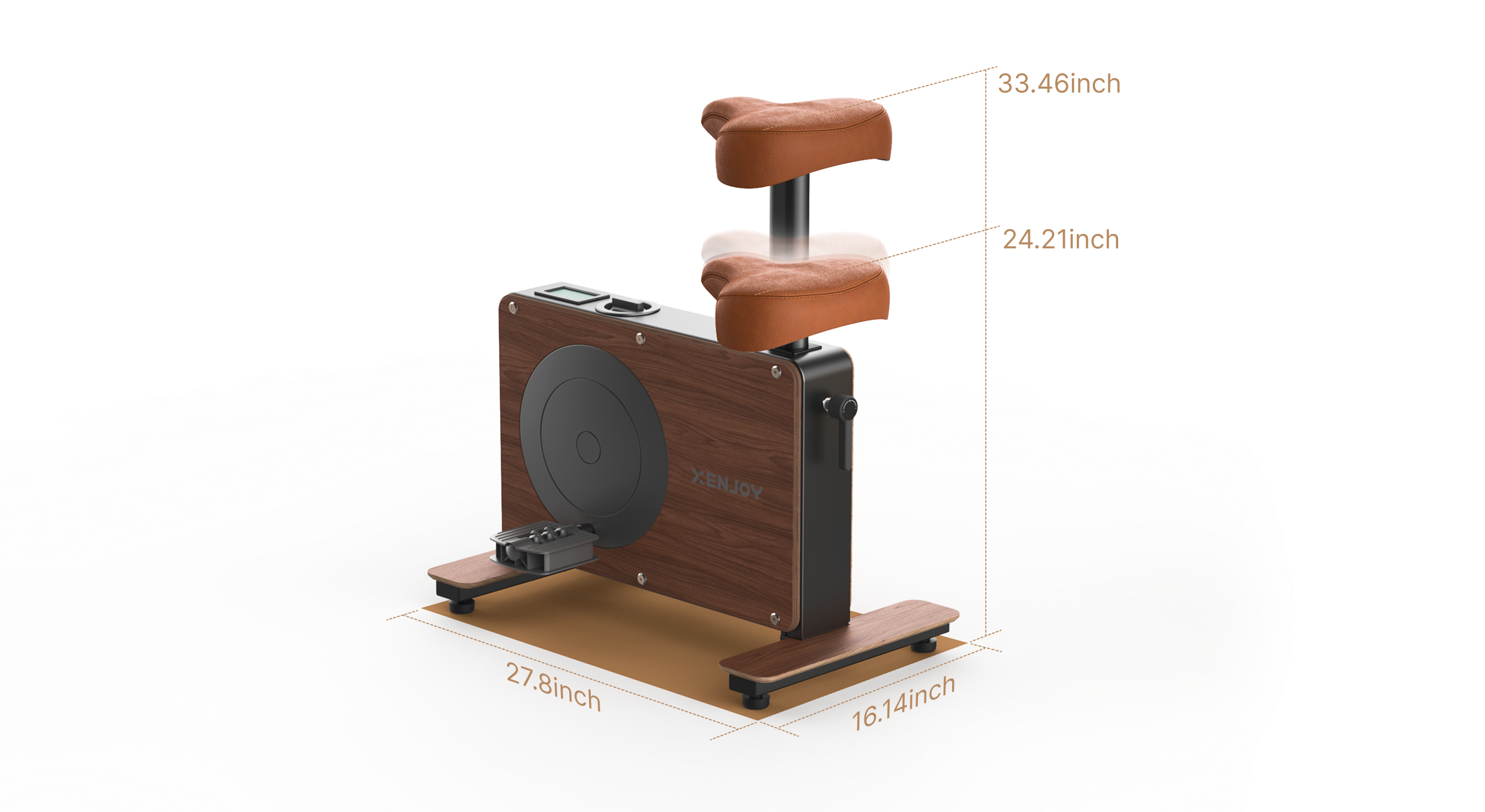
For busy professionals, our XENJOY Cube Cycle brings these benefits right to your workspace. With real wood accents, refined metalwork, and a footprint under 3.2 ft², it fits seamlessly under your desk while delivering purposeful motion to idle moments throughout your day.
Does Cycling Help Build Core Muscles
Building visible core muscles requires low body fat percentage combined with muscle development. Cycling helps with both aspects—it burns calories to reduce overall body fat while strengthening the underlying core muscles. However, spot reduction is a myth. You can't target belly fat loss just by cycling, but you can create a leaner physique overall when you combine regular cycling with healthy eating habits.
The type of cycling you do significantly impacts core engagement levels. Uphill cycling or high-resistance pedaling challenges your core more intensely, as you naturally lean forward slightly and engage your rectus abdominis to assist in the pedaling motion. This more aggressive style of cycling calls on your obliques to maintain balance and generate power.
Studies involving university cyclists found that those who completed a 6-week core strength training program alongside their regular cycling showed improved speed compared to control groups. This suggests that while cycling does build some core strength, combining it with dedicated core work produces the best results for overall performance and muscle development.
Cycling vs Running for Core Strength
When comparing cycling to running for core development, running typically provides greater core engagement. Running is a weight-bearing exercise that requires more upper body and core involvement to maintain upright posture and efficient stride mechanics. The Journal of Strength and Conditioning Research found that while both activities improve lower body strength, running leads to greater improvements in core strength and stability.
That doesn't mean cycling is inferior—it offers different benefits. Cycling provides a low-impact alternative that protects your joints while still engaging your core muscles. This makes it ideal for people with joint issues, those recovering from injuries, or anyone who wants to avoid the high-impact stress of running. Many fitness experts recommend incorporating both activities into a balanced training program to get the best of both worlds.
For professionals who can't spare time for traditional workouts, cycling offers an accessible way to maintain core strength without leaving your workspace. Our Cube Cycle makes this even easier by turning idle desk time into productive movement that engages your core throughout the workday.
Does Cycling Improve Core Stability for Back Pain Relief
One of the biggest benefits of cycling for core strength is its positive effect on back pain. When done with proper posture and setup, cycling is a low-impact exercise that strengthens back and core muscles without placing excessive strain on your spine. A strong core provides better support for your spine and reduces the likelihood of lower back pain.
Research shows that stronger lower body muscles contribute to better spinal support and lower incidence of back pain. The American Council on Exercise notes that low-impact exercises like cycling can help ease lower back pain by promoting gentle movements that boost circulation and flexibility without overloading the spine. Regular cycling helps strengthen the glutes, hamstrings, and core muscles that support your lower back.
Proper cycling posture is key to getting these benefits. When you maintain good form—keeping your back straight, shoulders relaxed, and core engaged—cycling encourages proper spinal alignment that takes pressure off your lower back. This makes cycling particularly beneficial for people who experience back pain from prolonged sitting, a common issue for desk workers.
Maximizing Core Benefits with Our Cube Cycle
We designed the XENJOY Cube Cycle specifically for professionals who value both movement and design. This compact under-desk stationary bike lets you engage your core muscles while you work, turning unproductive sitting time into active strengthening sessions. The compact footprint means it won't disrupt your workspace aesthetic or functionality.
Using an under-desk bike like our Cube Cycle provides unique core benefits. While pedaling maintains an upright and stable posture, you engage your core muscles—including your abs—throughout the session. This subtle but consistent activation contributes to improved core strength and stability over time. Unlike traditional gym workouts that require schedule changes and commute time, the Cube Cycle integrates seamlessly into your existing routine.
The beauty of under-desk cycling is its accessibility. You can start with light resistance and short sessions, gradually building up as your core strength improves. Even 20-30 minutes of gentle pedaling throughout your workday adds up to significant core engagement, helping you maintain better posture and reduce the fatigue that comes from static sitting positions.
Building a Stronger Core Through Consistent Cycling
Consistency matters more than intensity when building core strength through cycling. Regular, moderate cycling sessions develop core endurance better than occasional intense workouts. By incorporating cycling into your daily routine—whether through our Cube Cycle at your desk or traditional cycling sessions—you create sustainable habits that lead to real, lasting improvements in core stability and strength.
Complementing your cycling with targeted core exercises amplifies the benefits. Exercises like planks, bird dogs, bridges, and dead bugs work synergistically with cycling to create a well-rounded core strengthening program. The cycling builds functional, stabilizing strength, while dedicated core exercises target specific muscle groups for balanced development.
We've found that professionals who use our Cube Cycle report better posture, reduced back discomfort, and improved energy levels throughout the workday. These benefits stem from the constant, gentle core engagement that under-desk cycling provides—a perfect complement to the sedentary nature of desk work.
Ready to Strengthen Your Core While You Work?
The question "is cycling good for core strength" has a clear answer: absolutely. Cycling engages your core muscles as stabilizers, builds functional strength, supports better posture, and helps protect against back pain. While it's not a replacement for targeted core exercises, cycling provides valuable core activation that fits naturally into your daily routine.
Our XENJOY Cube Cycle makes it easier than ever to harness these benefits. With its compact design, real wood accents, and refined craftsmanship, it brings purposeful movement to your workspace without disrupting your flow. Whether you're answering emails, attending virtual meetings, or working through spreadsheets, you can engage your core and strengthen your body.
Don't let another day of sitting idle pass you by. Take control of your core strength and overall wellness with the Cube Cycle. Place your order today or leave a quote request, and we'll help you start your journey toward a stronger, more stable core—all while you work.
Frequently Asked Questions
Does cycling flatten your stomach?
Cycling helps reduce overall body fat, including belly fat, when combined with a healthy diet. However, visible abs require low body fat percentage achieved through calorie control and regular exercise. Cycling alone won't give you a flat stomach, but it's an effective tool for burning calories and strengthening the underlying core muscles that create a toned midsection.
How long should I cycle to see core strength improvements?
Most people notice improved core stability within 4-6 weeks of regular cycling. For best results, aim for at least 20-30 minutes of cycling most days of the week, combined with 2-3 core-specific exercise sessions. Consistency matters more than duration—daily short sessions on an under-desk bike can be just as effective as longer, less frequent rides.
Can under-desk bikes really strengthen my core?
Yes, under-desk bikes engage your core muscles to maintain proper posture and stability while pedaling. While the intensity is lower than a traditional stationary bike, the constant engagement throughout your workday adds up to significant core activation. Combined with proper sitting posture, under-desk cycling helps build core endurance and reduces back strain from prolonged sitting.
Is cycling better than sit-ups for core strength?
Cycling and sit-ups serve different purposes. Sit-ups directly target your rectus abdominis with focused contraction, while cycling builds functional core strength through stabilization. The best approach combines both—cycling for endurance and functional strength, sit-ups or planks for targeted muscle building. This combination creates a well-rounded core that's both strong and stable.
What's the best cycling position for core engagement?
Leaning slightly forward with a straight back, relaxed shoulders, and engaged core provides optimal core activation. Standing positions or high-resistance pedaling increase core engagement even more. On an under-desk bike, maintain upright posture with your abs gently pulled in and your shoulders back—this ensures your core stays active throughout your pedaling session.