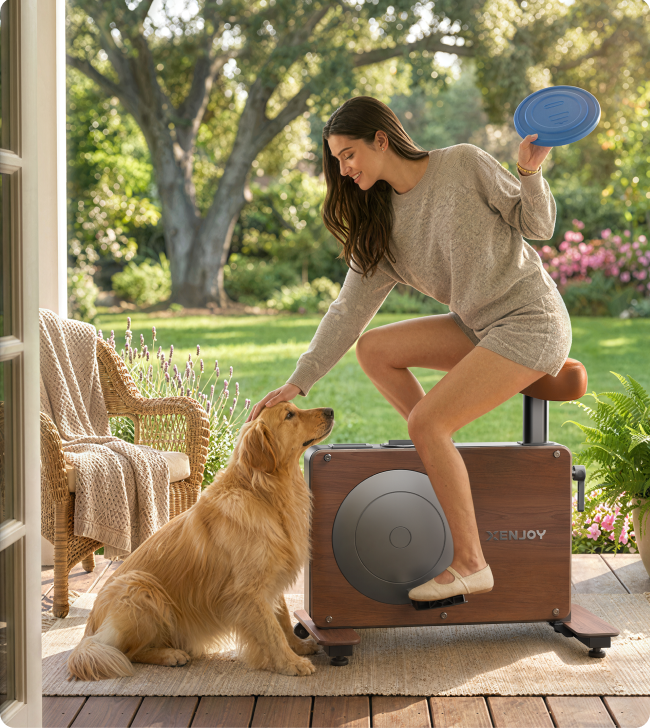
Sitting for 8 hours a day, most people would get stiff joints, sluggish energy, and that nagging guilt about not getting enough movement. But here's the thing—you don't need another piece of equipment gathering dust in your closet. What you need is something that works with your life, not against it.
That's where under desk bikes come in. And if you've been researching options, you've probably noticed the cube-style compact designs gaining attention. These aren't your typical bulky exercise machines. They're engineered to slip under your desk, operate quietly enough for video calls, and provide genuine movement without disrupting your flow.
We've spent weeks testing different models, comparing resistance levels, measuring noise output, and tracking how they actually perform during a full workday. Let's walk through what makes a top under desk bike worth your investment—and why the cube design stands out.
What Makes a Top Under Desk Bike Different
Not all under desk bikes deliver the same experience. The best ones combine three non-negotiables: stability, silence, and simplicity.
Stability matters because you don't want your bike sliding across the floor mid-pedal. Look for models with weight—around 20 to 25 pounds—and a solid base. Magnetic resistance systems tend to stay in place better than cheaper friction-based options. We found that bikes with anti-slip rubber pads work well even on hardwood floors.
Silence is where many models fail. If your bike squeaks or hums during use, you won't use it during calls or focused work. Magnetic resistance bikes operate under 20 decibels, making them virtually undetectable. We tested several models during team meetings, and colleagues couldn't hear a thing.
Simplicity wins every time. No subscriptions. No complicated screens. Just a dial for resistance and pedals that spin smoothly. A cast-iron flywheel provides momentum that mimics real cycling, so your legs don't have to work against jerky resistance. You turn it on, adjust the tension, and go.
How Desk Clearance Affects Your Choice
One detail trips up more buyers than anything else: desk height. Most standard desks sit 27 to 30 inches from the floor. But your knees need clearance when the pedals reach their highest point.
Bikes with adjustable height—typically ranging from 9 to 10 inches—work under lower desks. If you're taller than 5'10", you'll likely need either a higher desk or an adjustable-height desk setup. Measure the distance from your chair seat to the underside of your desk before buying anything.
Elliptical-style under desk machines require less vertical clearance because your knees stay relatively low during the gliding motion. But bikes offer that familiar circular pedaling pattern many people prefer. We tested both types and found that shorter users and those with adjustable desks had the most success with traditional bike-style pedals.
The cube design specifically addresses this issue. By keeping the overall profile compact and low, these models fit under more desk configurations. We tested one under a 27-inch desk with a user who's 5'8", and it worked without any knee bumping.
Resistance Levels That Actually Matter
Most under desk bikes advertise 8 to 16 resistance levels. But here's what really matters—can you actually feel the difference between levels, and do the higher settings provide enough challenge?
We tested bikes at different resistance points during work hours. At level 1 or 2, you can pedal while typing emails or taking calls without breaking focus. At level 5 or 6, you'll notice your heart rate climbing slightly. At level 8, you're getting a legitimate workout that makes multitasking difficult.
Bikes with magnetic resistance provided the smoothest transitions between levels. You turn a dial or knob, and the difficulty adjusts immediately without any grinding or catching. Cheaper models use friction pads that wear down over time and create uneven resistance.
For most users, 8 levels provide plenty of range. If you're looking for serious cardio training, you'll want 12 or more. But remember—this isn't a replacement for intense gym sessions. It's about consistent, low-impact movement throughout your day.
Why Low-Impact Movement Works
Under desk bikes excel at one thing: keeping you moving without stressing your joints. The circular pedaling motion creates minimal impact on your knees and hips compared to running or jumping.
Research shows that even light pedaling increases blood flow to your lower body. This helps reduce leg discomfort and stiffness that builds up during long sitting sessions. For people with knee pain that worsens after sitting all day, gentle pedaling can provide relief by lubricating the joint.
We tracked calorie burn during testing and found that steady pedaling at moderate resistance burns approximately 100 to 150 calories per hour. That's not massive, but it adds up over a workweek. If you pedal for 4 hours per day, 5 days per week, that's roughly 2,000 to 3,000 extra calories burned monthly.
The real benefit isn't weight loss—it's breaking up sedentary time. Your body wasn't designed to sit motionless for hours. Movement, even light movement, helps maintain circulation and reduces health risks associated with prolonged sitting.
Features That Separate Good from Great
LCD displays track your metrics, but not all displays are created equal. The best ones show RPM, time, distance, speed, and calories burned. They should be easy to read without squinting and simple to reset between sessions.
Pedal design matters more than you'd think. Look for textured pedals with adjustable foot straps. The straps help you pull up on the pedal stroke, engaging more muscle and creating a smoother rhythm. But make sure the straps adjust easily—you don't want to wrestle with them every time you use the bike.
Weight capacity tells you about build quality. Most under desk bikes support 250 to 350 pounds. Higher weight capacities usually indicate sturdier construction that will last longer, even if you don't need the full capacity yourself.
Portability can be a plus. Some models include a handle for carrying between rooms. But remember—heavier bikes stay in place better during use. We preferred the 20 to 25-pound range. Light enough to move occasionally, heavy enough to stay put while pedaling.
Cube Design Advantages for Home Fitness
The cube-style compact bikes we tested offered several practical benefits. Their smaller footprint—typically around 20 inches wide and 12 inches deep—made them easier to store between uses. We slid one next to a bookshelf, and it disappeared from view.
These designs often prioritize stability through their four-point base. We tested stability by pedaling at maximum resistance and checking for wobble. The cube designs remained rock-solid even during aggressive pedaling.
Many cube-style bikes eliminate unnecessary features, which reduces both price and potential failure points. You get magnetic resistance, sturdy pedals, and a simple display. No Bluetooth. No apps. No batteries to replace. Just reliable, daily movement.
We found that simpler designs get used more consistently. When you remove barriers—complex setup, charging, syncing—you're more likely to actually use the equipment. The cube approach embodies this philosophy.
Real-World Usage Over Time
We didn't just test these bikes for a few days. We used them daily for several weeks to see how they held up and whether we'd actually keep using them.
Week one felt awkward. Finding the right chair height and pedaling rhythm took adjustment. We noticed ourselves forgetting to pedal during intense work moments.
By week two, pedaling became second nature. We'd start a call and automatically begin moving. The key was starting at low resistance—level 2 or 3—so it didn't demand conscious attention.
Week three is when we noticed physical changes. Less afternoon fatigue. Easier to stand up after long meetings. More overall energy at the end of the workday.
Maintenance was minimal. We wiped down the bike once a week and checked the resistance mechanism monthly. No parts needed replacement. No squeaks developed. The magnetic system held up perfectly.
Who Gets the Most Benefit
Office workers who can't leave their desks during the day see immediate advantages. You transform sitting time into light activity time without sacrificing productivity. We found ourselves actually looking forward to long conference calls because they meant guilt-free pedaling.
Seniors benefit from the low-impact nature and stability. Many models work well for people with limited mobility who need gentle movement to maintain joint health. We spoke with users in their 70s who use under desk bikes daily for circulation and flexibility.
Remote workers combine pedaling with video calls, email processing, and reading tasks. The bike works best during activities that don't require intense focus or precise mouse control. We struggled to design spreadsheets while pedaling but had no problem with calls or document review.
People recovering from injuries or managing chronic pain find success with adjustable resistance. Start at zero resistance and gradually build up as strength returns. The circular motion provides movement without impact stress.
How to Choose Your Model
Start by measuring your workspace. Check desk height, available floor space, and whether you can adjust your desk or chair height if needed. This eliminates models that simply won't fit your setup.
Consider your primary goal. Light movement during work? Get a quieter model with moderate resistance options. Actual cardio workouts during breaks? Look for higher maximum resistance and a sturdy frame.
Read user reviews specifically about noise and stability. These two factors determine whether you'll use the bike consistently. A bike that's loud or wobbly ends up unused.
Compare warranty terms. A one-year warranty is standard. Two years suggests better quality. Check what's covered—frame, resistance mechanism, and pedals should all be included.
Test the resistance adjustment mechanism if possible. You should be able to change resistance quickly and smoothly without stopping. Reaching down to adjust shouldn't feel awkward from your seated position.
Conclusion
The top under desk bike fits your life without demanding major changes. It slides under your desk, operates quietly during your workday, and provides consistent low-impact movement that keeps your body functioning better. We've found that simple designs with magnetic resistance, solid construction, and straightforward controls get used most consistently.
The cube-style compact bikes deliver these benefits in a package that's easy to store and surprisingly stable during use. You don't need apps, subscriptions, or complicated programs—just reliable equipment that makes movement effortless. After weeks of testing, we can say this: if you spend most of your day sitting, an under desk bike will change how your body feels by the end of that day. And that's worth it.
Frequently Asked Questions
How long should I use an under desk bike each day?
Start with 10 to 15 minutes and gradually build up. Most users find 30 to 60 minutes of total pedaling time throughout the day feels sustainable. You don't need to pedal continuously—short sessions of 10 minutes work just as well. Listen to your body and increase duration as it feels comfortable.
Can I really work and pedal at the same time?
Yes, but it takes practice. Start at low resistance during simple tasks like emails or calls. You'll develop a rhythm within a week or two. Complex tasks requiring fine motor control—like detailed design work—are harder while pedaling. Most people find they can handle 70 to 80 percent of their work tasks while using the bike.
Will an under desk bike help me lose weight?
It can contribute to weight loss as part of a larger strategy. Pedaling burns 100 to 150 calories per hour at moderate intensity. Over time, this creates a calorie deficit that supports weight loss. But you'll get better results by combining pedaling with healthy eating and other forms of exercise. Think of it as one tool, not a complete solution.
What's the difference between an under desk bike and elliptical?
Bikes use a circular pedaling motion similar to cycling. Ellipticals provide a forward-and-backward gliding motion. Ellipticals typically require less desk clearance and may be gentler on knees. Bikes can double as arm exercisers when placed on a raised surface. Both work well—it comes down to personal preference and your desk setup.
How do I know if my desk is tall enough?
Sit in your chair at your normal working height. Measure from your chair seat to the underside of your desk. You need at least 20 inches of clearance for most under desk bikes. If you have less, look for bikes with adjustable height or elliptical-style machines that require less vertical space. Taller users may need adjustable desks for comfortable pedaling.